

Network Security Best Practices for 2026
Network security threats are evolving faster than ever. As businesses become more connected, the attack surface grows. Staying ahead of cybercriminals requires a proactive, layered approach to network security. Here's what matters most in 2026.
Zero Trust Architecture
The "trust but verify" model is dead. Zero Trust means no user or device is trusted by default, even if they're inside the network perimeter. Every access request is authenticated and authorized based on identity, device health, and context. Implementing Zero Trust is one of the most effective ways to limit the blast radius of a breach and contains lateral movement by attackers.
Network Segmentation
Flat networks — where all devices can communicate with each other — are a cybersecurity nightmare. Proper network segmentation divides your infrastructure into isolated zones: corporate devices, IoT equipment, guest access, and servers each live in their own segment. If ransomware infects one segment, it cannot easily spread to others. VLANs and managed switches make this achievable for businesses of any size.
Endpoint Detection and Response (EDR)
Traditional antivirus software is no longer sufficient. Modern threats require Endpoint Detection and Response (EDR) tools that monitor device behavior in real-time, detect anomalies, and automatically isolate compromised machines. EDR platforms like those included in our NinjaOne managed IT package provide continuous visibility across every endpoint on your network.
Multi-Factor Authentication Everywhere
Passwords alone are not enough. Multi-Factor Authentication (MFA) should be enabled on every business system — email, VPN, cloud services, and remote desktop. MFA blocks over 99% of automated account compromise attacks. With authenticator apps and hardware tokens readily available, there's no excuse for any business to skip MFA in 2026.
Regular Vulnerability Assessments
You can't protect what you don't know is vulnerable. Regular vulnerability scans identify unpatched software, misconfigured services, and open ports that attackers can exploit. We recommend quarterly network assessments at minimum, with automated patch management running continuously. Our managed IT services include automated vulnerability scanning and patching to keep your systems current.
Structured Cabling and Physical Security
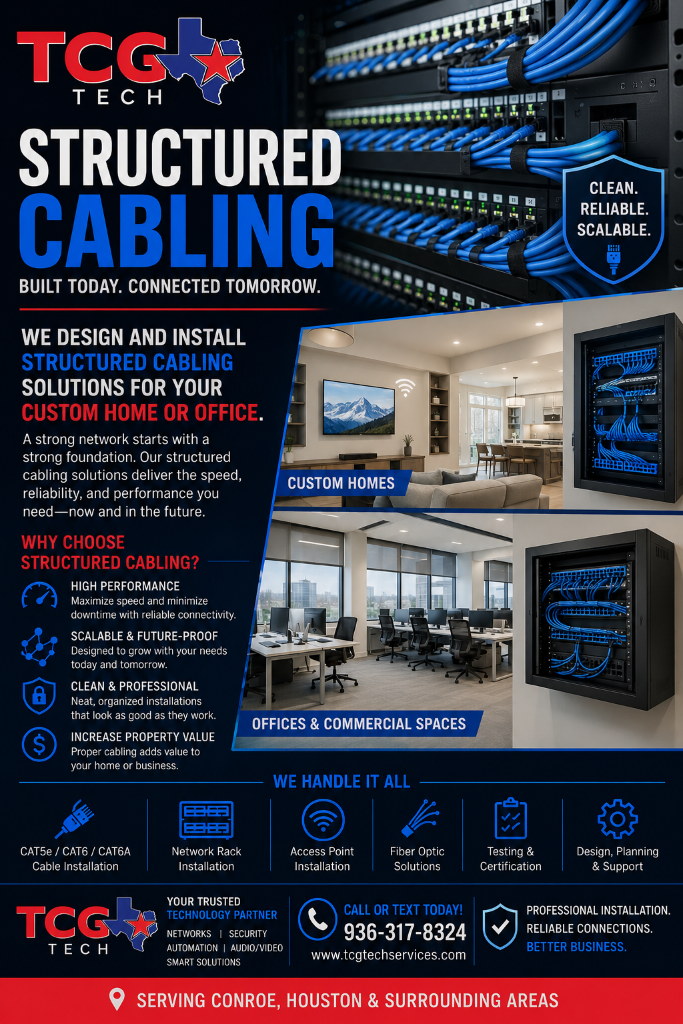
Network security isn't just digital. Physical access to your network equipment — switches, routers, servers — must be controlled and monitored. Proper structured cabling with labeled, organized runs makes troubleshooting faster and reduces the risk of accidental or malicious cable tampering. Locked network closets with access control and camera coverage complete the picture.